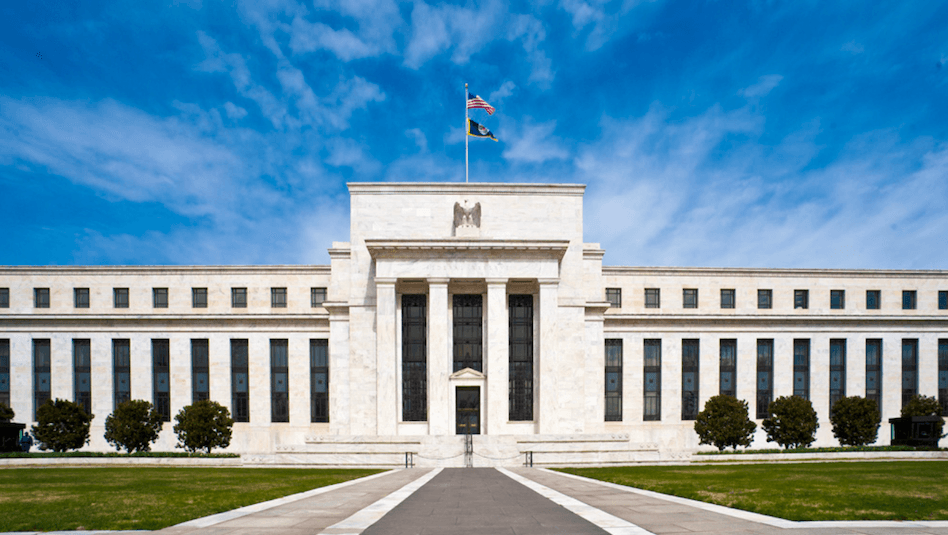
The US Federal Reserve (Fed) delivered a 25-basis-point (bp) policy rate hike, bringing the target range for the Federal Funds Rate (FFR) at 3.75%-4.00%.
Key points
- The Fed hiked interest rates for the first time since July 2023, as inflation has remained above its 2.0% target.
- With job gains keeping pace with the workforce and the unemployment rate remaining low, the Fed appears to have more leverage to focus on US inflation, which has exceeded its 2.0% target for more than five years now.
- The FOMC report noted that economic activity in the US has been expanding at a solid pace, albeit with risks that remain elevated, in part due to ongoing geopolitical developments.
What now?
- Metrobank revised its forecast for the Fed and now expects another 25-bp policy rate hike this year, bringing the Fed Funds Rate to 4.00-4.25% by year-end, as it continues to prioritize addressing inflation risks.
- As inflation is expected to ease through next year, the Fed’s current hiking cycle could be short-lived. Metrobank likewise revised its Fed Funds Rate projection for 2027, with the Fed eventually easing rates in the latter part of next year as economic risks weaken, bringing the Fed Funds Rate back to 3.50-3.75% by the end of 2027.
- On the domestic front, given the Fed's adjusted forecasts and expectations of elevated inflation, Metrobank now expects two additional 25-basis-point policy rate hikes by the Bangko Sentral ng Pilipinas (BSP) through 2026. This would bring the target reverse repurchase (RRP) rate to 5.50% by year-end. As inflation is expected to ease next year, the end-2027 forecast of 4.75% is maintained, translating to a cumulative 75 bps of cuts for the year.
- Lastly, the USD/PHP forecast is revised upward as the Fed’s current hiking cycle is expected to strengthen the US dollar, putting pressure on the peso. Metrobank now projects year-end USD/PHP to settle at 61.9 by end-2026 and 61.3 by end-2027.
Implications on investors
- On global fixed income, maintain an underweight duration position at the front end of the yield curve up to 5 years to mitigate interest rate risk amid potential further monetary tightening and ongoing geopolitical volatility. Stay nimble and use bouts of volatility to gradually and opportunistically add longer and high-quality sovereign and corporate bond exposure at higher all-in yields.
- On global equities, maintain a neutral to bearish stance as investors navigate a challenging backdrop of elevated oil prices, higher funding costs post-rate hike, and persistent geopolitical risks. We expect heightened near-term volatility as sticky inflation and a hawkish Fed may continue to weigh on market sentiment. Stay cautious in technology and defensive sectors like utilities and healthcare.
- On gold, accumulate long positions on pullbacks below the USD 4,300 level as the market absorbs the Fed’s 25-basis-point hike. Gold may also retrace further as yields increase amid sticky inflation and ongoing geopolitical risk. Target price is USD 4,400 as escalating Middle East hostilities add to the safe-haven demand for gold but capped by higher for longer Fed policy.
- On the local front, maintain existing USD/PHP long positions and continue buying on dips. The pair remains supported by the Fed's hawkish stance, along with fixing and corporate demand. Key support levels are at 62.60 and 62.45, while resistance is at 63.00 and 63.20. Near-term price action remains biased higher, with the pair expected to trade within the 62.80-63.10 range.