


BSP sees less pressure to hike after Q2 growth slump
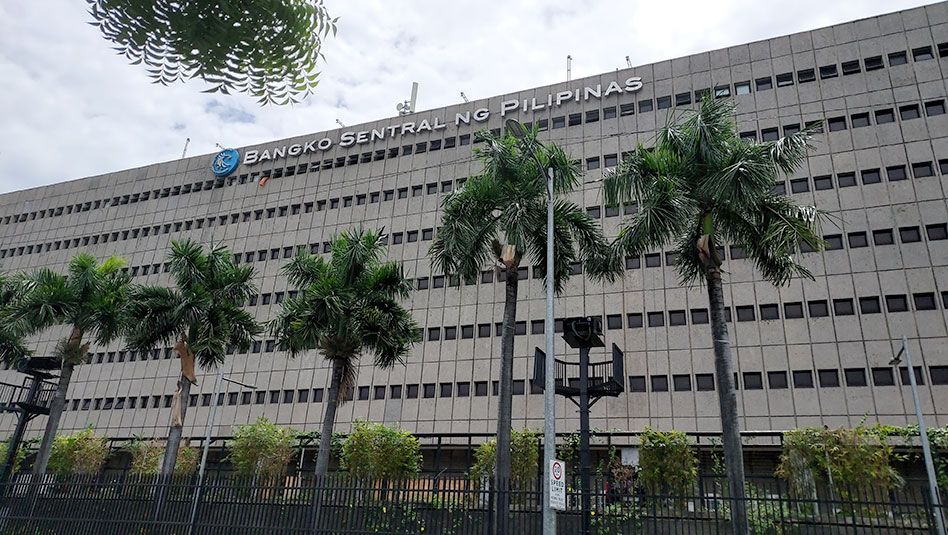
The Bangko Sentral ng Pilipinas (BSP) remains open to further tightening to steer inflation back to its target but feels less pressure to do so after domestic growth weakened anew.
BSP Governor Eli M. Remolona, Jr. on Monday said they could still hike “as much as necessary” to ensure inflation continues to soften and eventually return near their 3% goal.
He also hinted that they are not yet convinced that the latest inflation figures point to a sustained downtrend.
“It’s not really a downtrend. Only one data point in the core (inflation series) slowed,” the BSP chief told reporters in Filipino on the sidelines of a BSP event on Monday.
According to Mr. Remolona, both a third straight hike and a pause are on the table for now.
“Lahat pwede eh. Lahat nasa table. Medyo ano ’yung data eh, hindi malinaw (Everything is possible and on the table. [But] the data is unclear),” he said.
However, when asked if the second-quarter growth print has eased the pressure to hike further, Mr. Remolona said: “Yes.”
In July, headline inflation eased for a fourth straight month to 6.2% from 6.4% in June but picked up sharply from 0.9% last year.
This brought the country’s year-to-date inflation to 5%, well above the central bank’s 3% target but still below its 6.4% projection for the entire year.
Core inflation, on the other hand, eased to 4.2% from 4.4% in June, but accelerated from 2.3% a year earlier. This excludes volatile food and energy prices.
According to Mr. Remolona, they are focusing more on core inflation as he noted that the headline clip is more vulnerable to supply shocks.
“It is better to focus on the core inflation, not the headline figure. We can actually control the core inflation, (whereas) the headline figure is affected by many supply shocks),” he said in mixed Filipino and English.
Meanwhile, BSP Deputy Governor Zeno Ronald R. Abenoja said core inflation may have plateaued as headline inflation continued to ease.
“So, headline inflation could be trending downward if you look at the last two prints,” he told reporters on the sidelines of the same event. “But aside from that, we’re looking at other measures of inflation. Core inflation may have plateaued. We have three data points recently above 4%.”
These, Mr. Abenoja noted, are considered in the Monetary Board’s decisions, alongside inflation expectations and inflation for the bottom 30% of households.
Mr. Remolona also noted that inflation typically weighs more in the BSP’s policy scale but added that they do not neglect growth concerns.
“That’s our mandate. Growth is implied by the inflation mandate. If you can maintain price stability, that tends to sustain growth,” he said in mixed English and Filipino.
“But in the short run, sometimes there are problems with growth. And then we take that into account. We don’t ignore that,” he added.
According to the BSP chief, their monetary policy decisions continue to account for the output gap, which remains negative after domestic growth slowed for a fourth straight quarter.
In the second quarter, the economy slumped to a new post-pandemic low growth of 2.3%, slower than 2.8% in the first quarter and 5.4% a year ago. Investments continue to be affected by declining public construction, while household spending was dampened by rising prices and job losses.
The 2.3% growth marked the economy’s worst performance since it contracted by 3.8% in the first quarter of 2021. Excluding the pandemic, it was the slowest quarterly growth in over 16 years or since the 1.8% in the fourth quarter of 2009.
The Philippines’ gross domestic product (GDP) grew by an average 2.6% in the first half of the year.
Mr. Abenoja said the central bank had expected growth to remain subdued in the first half of the year as it continues to adjust from last year’s slump.
“We said that probably (in) Q1 and even Q2 we will continue to see some adjustments, transition from the economy and then it’s probably this second half that we will see some firmer signs,” he said.
According to Economy Secretary Arsenio M. Balisacan, the economy has to grow by at least 4.4% in the second half to hit the government’s 3.5%-4.5% full-year target.
Mr. Abenoja noted that they are monitoring recent economic developments as they revisit their growth outlook for the year.
Meanwhile, Pantheon Macroeconomics said the muted growth in the second quarter, alongside cooling inflation, could then warrant a pause from the BSP at its upcoming policy meeting.
“We reckon, too, that this big Q2 miss, coupled with inflation now trending down from its post-Iran-war spike, will be just about enough to dissuade BSP’s Monetary Board from hiking further later this month,” Pantheon Chief Emerging Asia Economist Miguel Chanco and Asia Economist Meekita Gupta said.
Jean Olivia De Castro, head of fixed income at Manulife Investments Philippines, sees room for a third and final straight 25-bp hike before the BSP holds steady.
“With Q2 GDP slowing sharply to 2.3% y/y (year on year), we can expect the BSP’s bias to shift towards a measured 25-bp hike and then a hawkish pause, rather than the pre-GDP print expectation of a faster tightening,” Ms. De Castro said in a separate commentary.
“This is because existing weak domestic demand raises the cost of overtightening even as inflation remains above target. Amid higher inflation and FX (foreign exchange) risk, local monetary policy could stay restrictive for longer,” she added.
Since it reverted to tightening in April, the central bank has repeatedly signaled its commitment to steering inflation back to its target using all necessary monetary policy actions.
The key policy rate stands at a near one-year high of 4.75% after the BSP delivered one 25-bp hike at each of its meetings in April and June.
The Monetary Board is set to conduct three more policy reviews this year on Aug. 27, Oct. 22, and Dec. 17. — Katherine K. Chan
This article originally appeared on bworldonline.com